UP Government Makes Daily Newspaper Reading Mandatory in Government Schools
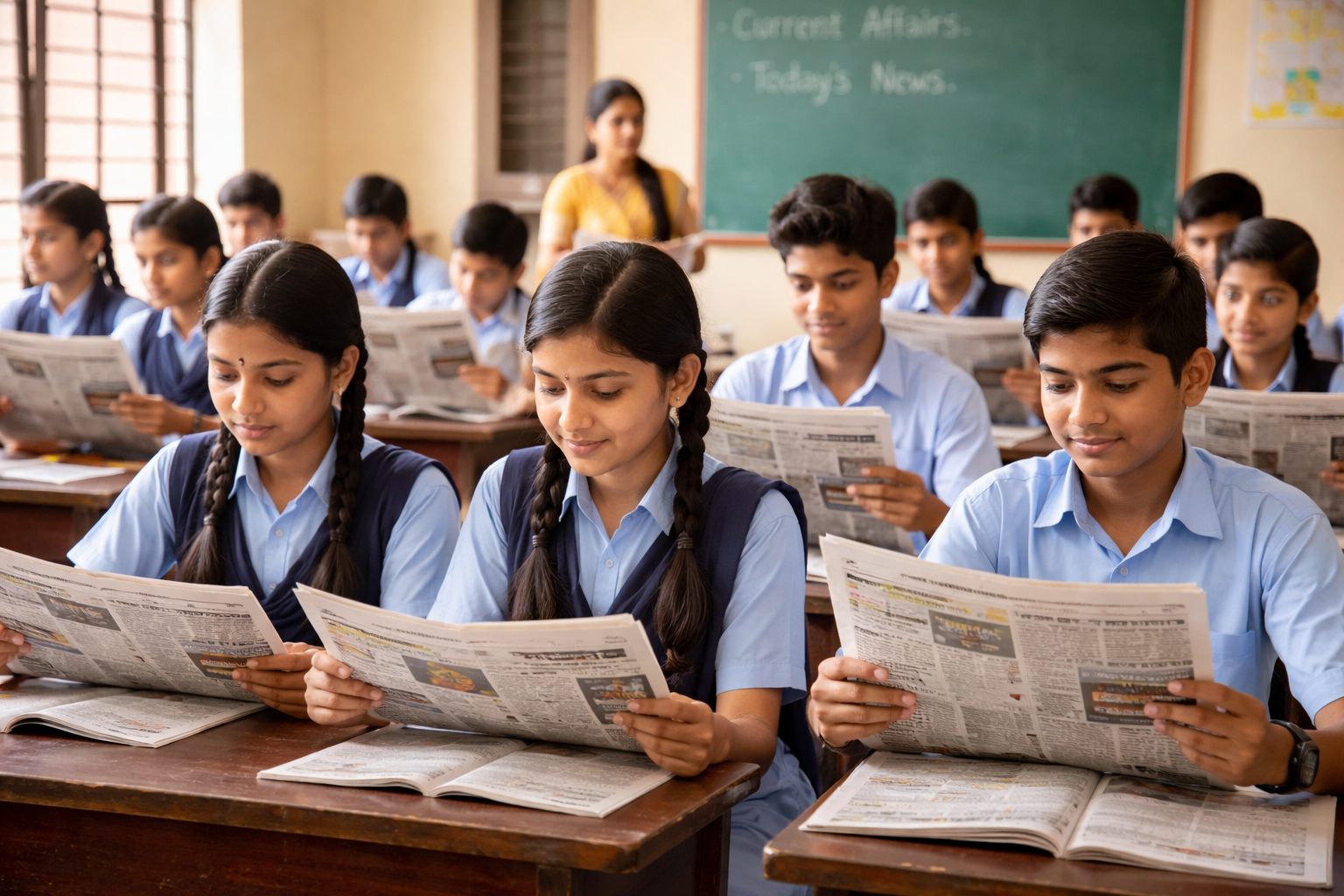
The UP government newspaper reading initiative marks a significant shift in classroom learning across the state. The Uttar Pradesh government has made daily newspaper reading compulsory for students studying in government schools, aiming to connect education with real-world events and current affairs.
The decision seeks to strengthen students’ general awareness, language proficiency, and analytical thinking while encouraging healthy reading habits from a young age.
Newspapers to Be Read During Morning Assembly
Under the new directive, students will read newspapers during morning assembly prayer meetings. Selected news items will be read aloud, and teachers will guide students in understanding and discussing major national, state, and local developments.
The initiative encourages interactive learning rather than rote reading. Teachers will help students analyse news reports, identify key facts, and understand their broader social context.
Students will also be asked to share at least five new words learned from newspapers, helping them expand vocabulary and improve comprehension skills.
Education Department Emphasises Holistic Learning
The Department of Basic Education, Uttar Pradesh stated that the initiative focuses on intellectual growth and awareness beyond textbooks.
In an official post on X, the department said that regular newspaper reading would help children develop logical thinking, expression skills, and a sense of responsible citizenship. Officials described the move as an effort to nurture curiosity and informed thinking among students.
The department added that newspapers provide real-life examples that help students relate classroom concepts to society.
Special Focus on Senior Students
The Additional Chief Secretary has issued specific instructions for students of Classes 9 to 12. Schools will encourage these students to write editorials once a week on important social, economic, or national issues.
Teachers will also organise group discussions in classrooms, allowing students to express opinions, listen to different viewpoints, and improve communication skills. News related to development, governance, and social challenges will form the basis of these discussions.
Education officials believe such activities will prepare students for higher education and competitive examinations while strengthening civic awareness.
Creative Activities for Middle School Students
Students of Classes 6 to 8 will participate in creative newspaper-based activities. Schools will guide them to prepare scrapbooks using news clippings related to science, environment, sports, and innovation.
This approach aims to make learning visual and engaging. By cutting, pasting, and organising news items, students will develop curiosity and research skills.
In addition, schools will hold weekly competitions involving Sudoku, crossword puzzles, and informative quizzes published in newspapers. These activities will help sharpen logical reasoning and problem-solving abilities.
Role of Teachers and School Heads
Teachers will play a central role in implementing the initiative. They will select age-appropriate news stories, lead discussions, and encourage participation from all students.
School heads will ensure that the activity remains inclusive and student-friendly, especially for children from rural or disadvantaged backgrounds who may have limited exposure to newspapers at home.
District Officers to Oversee Implementation
The government has assigned District Basic Education Officers (BSAs) the responsibility of monitoring the initiative’s implementation across schools.
The state will provide newspapers at government expense, ensuring that lack of resources does not become a barrier. Officials said the move would help bridge educational gaps, particularly in rural areas where access to information remains limited.
Building Responsible and Informed Citizens
Education experts have welcomed the decision, saying that early exposure to newspapers can help students develop critical thinking, awareness, and independent opinions.
By making newspapers part of daily school life, the UP government aims to create a generation of students who stay informed, think logically, and engage responsibly with society.
A Step Beyond Textbook Learning
The initiative reflects a broader shift toward experiential and discussion-based learning. By linking education with current events, the policy encourages students to observe, question, and understand the world around them.
As schools begin implementing the directive, the success of the initiative will depend on consistent execution and meaningful classroom engagement. For now, the move signals a renewed focus on learning beyond textbooks in Uttar Pradesh’s government schools.