India Becomes World’s Fourth Largest Economy; Set to Overtake Germany
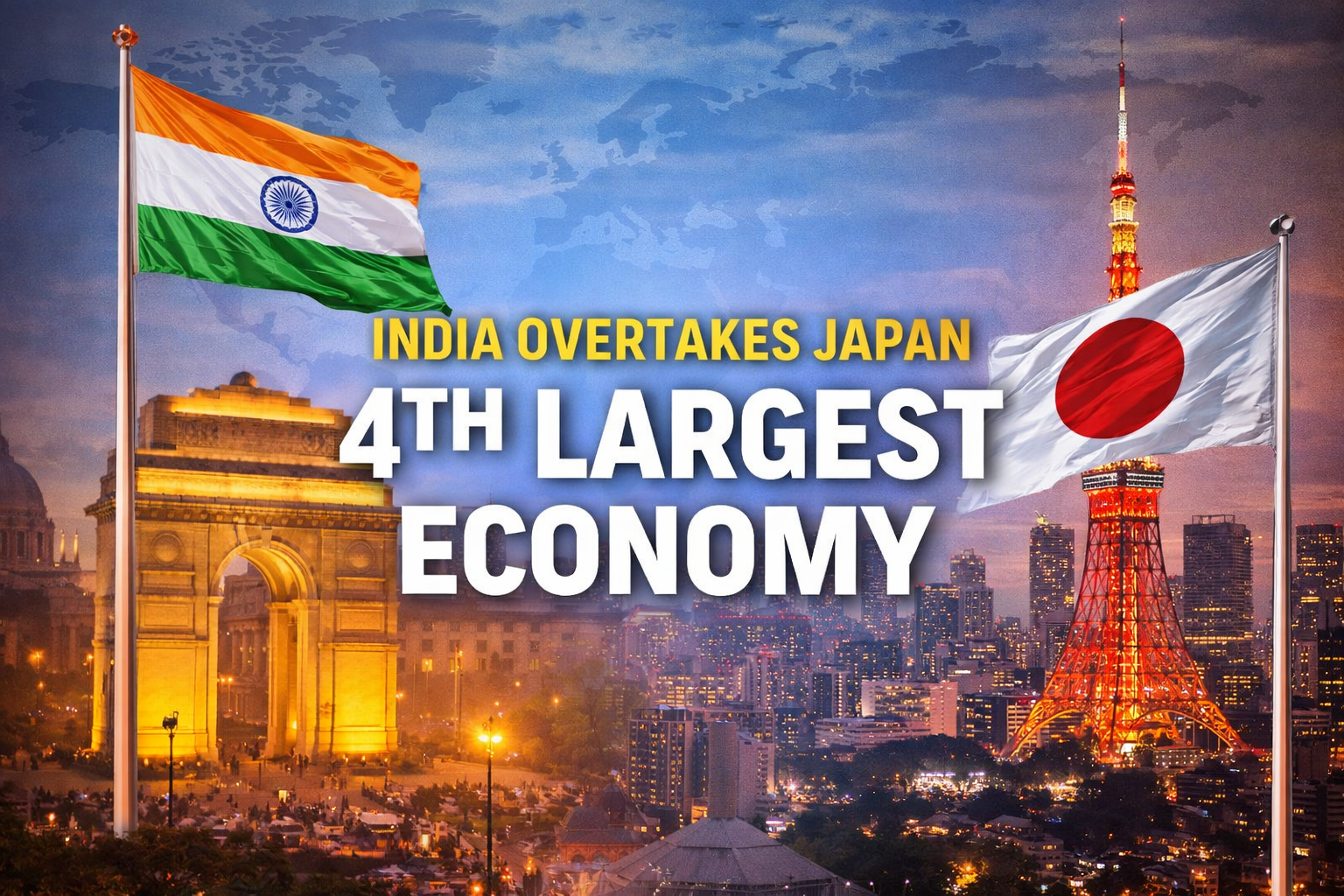
India has reached a historic economic milestone by overtaking Japan to become the world’s fourth-largest economy.
According to government estimates, India’s gross domestic product (GDP) has expanded by an impressive 105% over the past ten years, reflecting sustained growth, structural reforms, and rising domestic demand.
ALSO READ: Rahul Gandhi Warns of Threat to Indian Democracy
With this achievement, India now stands behind only the United States, China, and Germany, and policymakers are confident that the country could surpass Germany by 2030.
Multiple Factors Drive India’s Economic Leap
This economic leap is not the result of a single factor but a combination of long-term policy initiatives, demographic advantages, and increased global integration.
Over the past decade, India has focused on strengthening its macroeconomic fundamentals, improving infrastructure, and expanding its manufacturing and services sectors.
These efforts have helped the country maintain one of the fastest growth rates among major global economies.
Strong Domestic Consumption Supports Growth
A key driver behind India’s rise has been strong domestic consumption. With a large and young population, consumer demand has remained resilient even during global slowdowns.
Rising incomes, urbanisation, and expanding access to credit have boosted spending across sectors such as housing, automobiles, digital services, and retail.
This internal demand cushion has allowed India to grow even when export-driven economies faced external shocks.
Structural Reforms Improve Efficiency and Transparency
Another major contributor has been government-led structural reforms. Initiatives like the Goods and Services Tax (GST), insolvency and bankruptcy reforms, digitalisation of public services, and direct benefit transfers have improved efficiency and transparency.
These reforms have reduced transaction costs, widened the tax base, and encouraged formalisation of the economy.
Manufacturing Push Strengthens Industrial Base
India’s manufacturing push has also played a significant role. Programmes aimed at boosting domestic manufacturing and attracting global supply chains have helped India position itself as an alternative production hub.
Sectors such as electronics, pharmaceuticals, automobiles, and renewable energy have seen increased investment, both domestic and foreign, creating jobs and strengthening industrial capacity.
Services Sector Remains a Key Growth Engine
The services sector, traditionally India’s strength, continues to drive economic expansion. Information technology, financial services, startups, and digital platforms have grown rapidly.
India’s leadership in digital public infrastructure has improved service delivery and enhanced its global economic standing.
Infrastructure Investment Boosts Competitiveness
Infrastructure development has further supported growth. Large investments in highways, railways, ports, airports, and energy networks have improved connectivity and reduced logistics costs.
Better infrastructure has increased efficiency and attracted investor interest.
Outlook: India Eyes Third Position by 2030
Over the last decade, India’s economy has more than doubled in size, showing improved resilience despite global challenges. Looking ahead, the government believes India could surpass Germany by 2030 to become the world’s third-largest economy.
Sustained reforms, skill development, and inclusive growth will be key to achieving this goal.
ALSO READ: US Tech Giants Invest $67.5B in India’s AI & Data Centres