Goa Nightclub Fire a Tragedy for Entire Nation: CJI Surya Kant
Chief Justice of India Surya Kant has expressed deep sorrow over the deadly fire at a nightclub in Goa, calling it a “tragedy for the entire nation”. He offered condolences to the families of those who lost their lives, many of them young people.
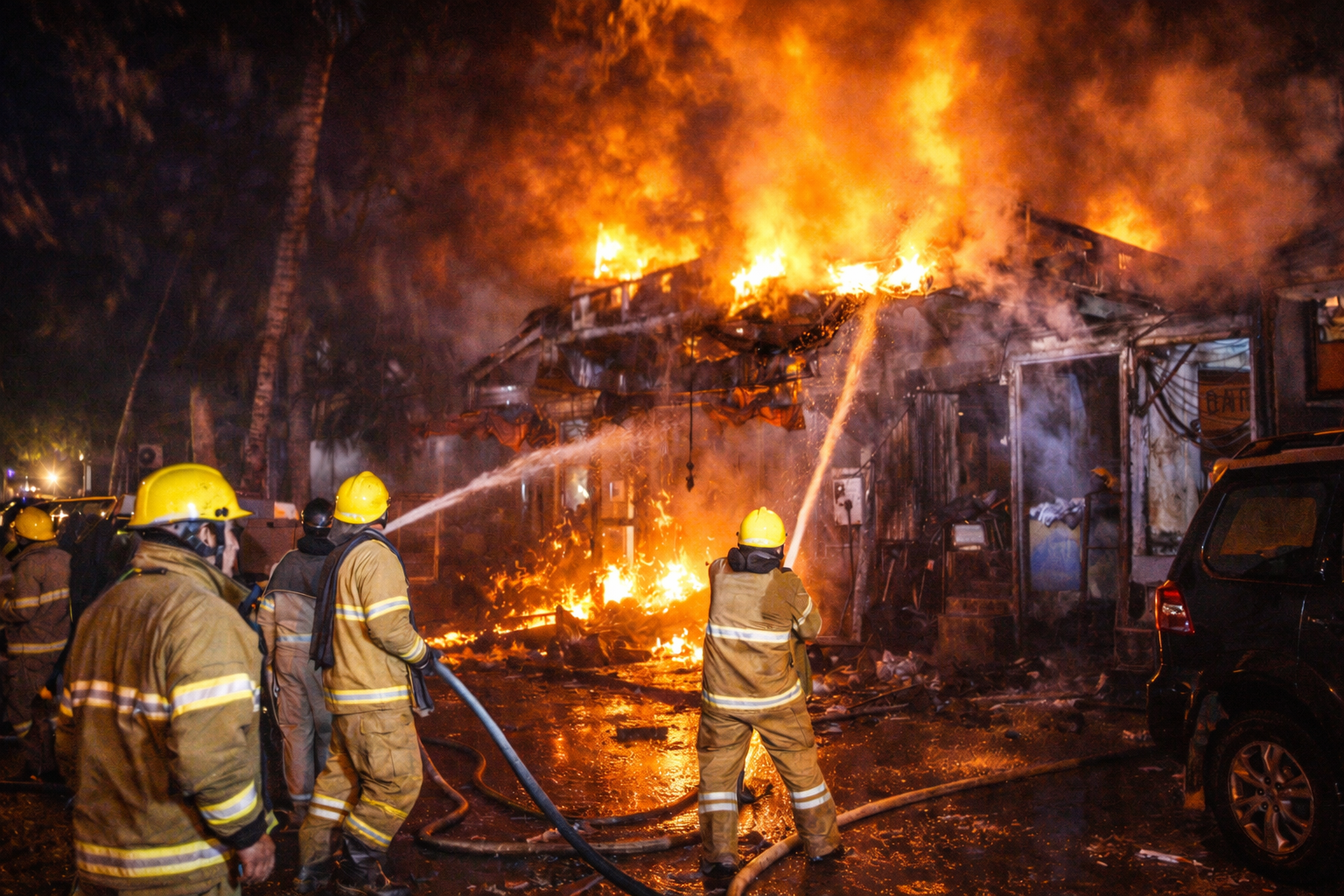
The fire at the Birch by Romeo Lane nightclub in Arpora, North Goa, occurred on December 6 and claimed 25 lives, including five tourists.
‘We Mourn the Loss of Young Lives’
Speaking at the inauguration of a special awareness campaign titled ‘Drugs: A Menace to the Society’, organised by the Goa State Legal Services Authority, the CJI said the loss went beyond statistics.
He said the victims included young people enjoying a break and workers supporting their families. He described the incident as a profound loss for loved ones and a tragedy for the country as a whole.
Drug Abuse Creeps in Quietly, Says CJI
During his address, Justice Kant spoke at length about substance abuse, calling it a silent crisis that unfolds within ordinary lives.
He said drug use often begins with curiosity, peer pressure, or experimentation. Many believe they can step away easily. However, addiction rarely remains controlled.
According to him, what starts as a private act soon places a heavy burden on families, education, livelihoods, and social institutions.
Law Alone Cannot Solve Addiction Crisis
The CJI stressed that drug abuse cannot be tackled through isolated actions. It needs collective responsibility involving families, educators, health professionals, communities, and institutions.
He said the law has an important role, but it should not always be the first or only response.
Justice Kant pointed out that India’s legal system recognises that punishment alone does not always deliver justice, especially in cases involving youth, vulnerability, and addiction.
Clear Line Between Users and Traffickers
The CJI drew a firm distinction between drug users and drug traffickers.
He said those who organise supply chains and profit from addiction are perpetrators of serious harm. For them, the law must act firmly and decisively.
However, he urged a different approach for first-time users, students, and young adults struggling with dependency. In such cases, the focus should shift from guilt to recovery.
Justice Kant said justice must preserve futures, not just close cases. He described this approach as realism, not leniency.
Balance of Deterrence, Treatment and Reintegration
According to the CJI, addiction can only be addressed through a careful balance of deterrence, treatment, and social reintegration.
He said institutions beyond courtrooms play a critical role in rehabilitation and recovery.
Vision for Multi-Door Courthouses
Earlier in the day, Justice Kant spoke at the Bar Council of India’s National Conference on Mediation in South Goa. He outlined a vision for India’s courts to evolve into “multi-door courthouses.”
Under this model, courts would function as comprehensive dispute-resolution centres rather than only trial venues.
He said litigants should not automatically face adversarial litigation. Instead, they should find multiple options, including mediation, arbitration, and litigation when necessary.
Mediation Is Law’s Highest Evolution
The CJI clarified that mediation does not weaken the legal system. Instead, it represents its highest evolution.
He said mediation reflects a shift from merely managing conflicts to actively cultivating harmony. Courts will continue to provide full trials where needed, ensuring fairness and empowerment for every litigant.
Justice Kant concluded that justice must be nuanced, humane, and responsive to the realities of society.
ALSO READ: This IIT–IIM Alumnus Left His Job to Heal India’s Broken Farmlands