Putin Flagged Pakistan’s Nuclear Risk in Private Talks With Bush 20 Yrs Ago
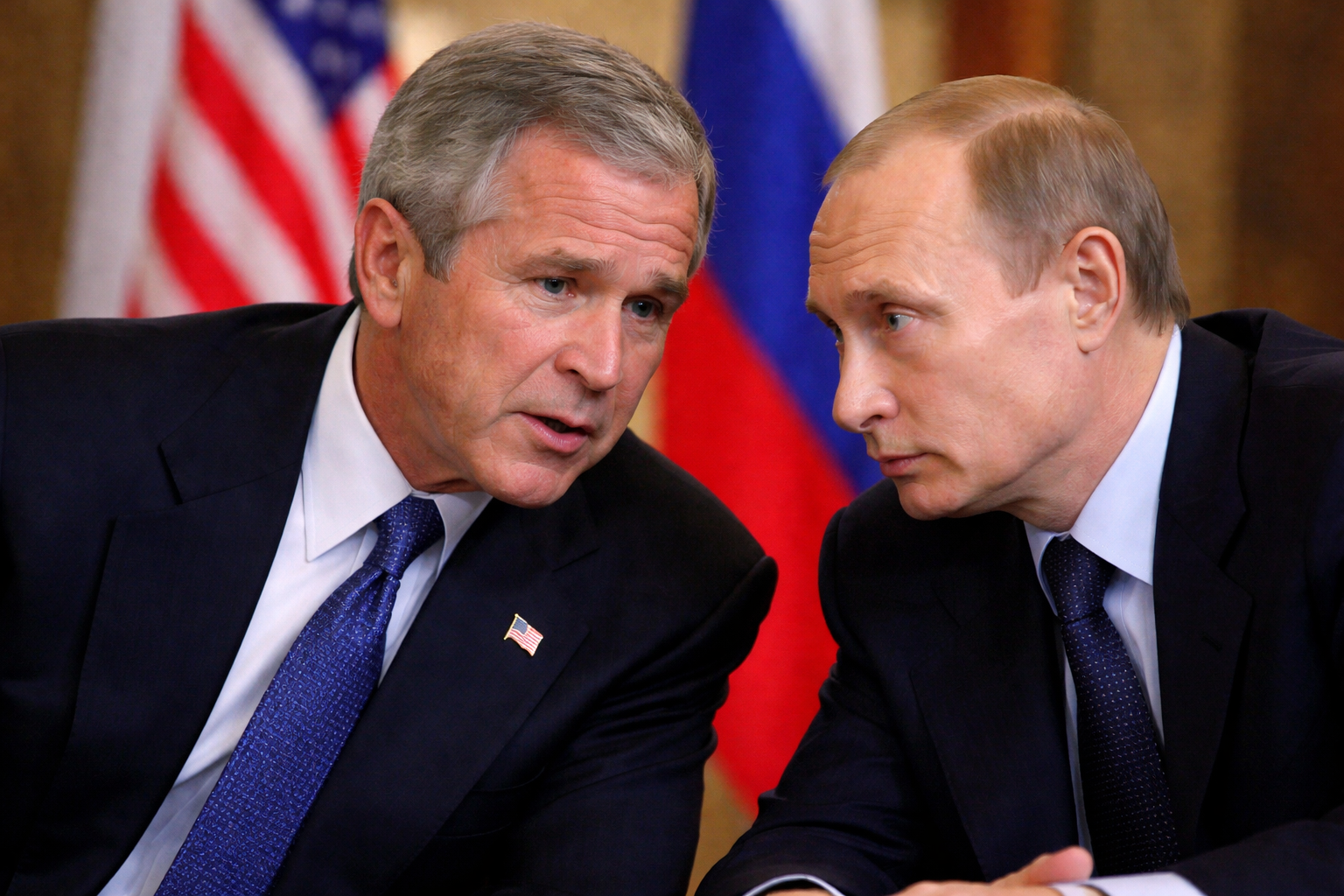
Newly released records have revealed that Russian President Vladimir Putin raised strong concerns about Pakistan’s nuclear programme during private talks with former US President George W Bush more than two decades ago. The discussions took place at a time when Pakistan was under military rule and facing global scrutiny over nuclear proliferation.
The transcripts were released by the US-based National Security Archive. They cover candid meetings and phone calls between the two leaders from 2001 to 2008. The documents show that both Washington and Moscow viewed Pakistan as a serious non-proliferation challenge.
Putin’s Warning at First Meeting
Putin and Bush met for the first time on June 16, 2001, in Slovenia. During the meeting, Putin openly questioned Pakistan’s political stability and control over its nuclear weapons.
According to the transcript, Putin described Pakistan’s army as “just a junta with nuclear weapons.” He stressed that Pakistan lacked democratic accountability. He also questioned why Islamabad did not face sustained international pressure.
Putin compared Pakistan’s treatment with that of other countries accused of nuclear violations. He pointed out that Iran and North Korea faced heavy criticism, sanctions, and isolation. Pakistan, he said, escaped similar scrutiny despite its record.
His remarks reflected Moscow’s unease about Western tolerance toward Pakistan during the rule of General Pervez Musharraf.
Shared Concerns With the United States
The records show that Bush did not reject Putin’s assessment. Instead, he acknowledged that Pakistan’s role in illicit nuclear transfers worried the United States as well.
Bush accepted that Pakistan remained a complicated partner. Publicly, Washington described Islamabad as a key ally. Privately, US leaders remained uneasy about its nuclear stewardship.
The transcripts highlight a rare moment of agreement between the two leaders on a sensitive global security issue. Both saw Pakistan’s nuclear programme as a risk that extended beyond South Asia.
AQ Khan Network Raises Alarm
Concerns resurfaced during an Oval Office meeting on September 29, 2005. Putin told Bush that uranium found in Iranian centrifuges appeared to be of Pakistani origin.
The revelation shocked both leaders. Bush called it alarming and said it made the United States nervous. Putin responded by saying Russia felt the same anxiety.
“Think about us,” Putin said, underlining Russia’s fear that nuclear leaks could threaten its own security.
The discussion focused on Abdul Qadeer Khan, the architect of Pakistan’s nuclear weapons programme. His secret network had supplied nuclear technology to Iran, North Korea, and Libya.
US Pressure on Pakistan
Bush told Putin that he had personally raised the issue with Musharraf. He said Washington pressed Pakistan hard after exposing the AQ Khan network.
Bush explained that Khan and some associates had been jailed or placed under house arrest. Still, he admitted that US officials wanted clearer answers.
“We want to know what they said,” Bush told Putin. His words reflected frustration over incomplete disclosures from Pakistani authorities.
The exchange showed that doubts persisted even years after the network’s exposure.
Ongoing Fears of Nuclear Leakage
The two leaders also discussed reports of continued cooperation between Pakistani elements and foreign nuclear programmes. Putin said Russian experts suspected ongoing links to Iran’s enrichment efforts.
Bush confirmed that US intelligence shared similar concerns. Both leaders feared that sensitive technology could spread beyond state control.
Despite Pakistan’s role as a US ally after the 9/11 attacks, the transcripts reveal deep private mistrust.
A Wider Security Threat
The documents show that Pakistan’s nuclear programme was not seen as an isolated issue. Leaders linked it to weak controls, opaque decision-making, and regional instability.
Putin repeatedly warned against nuclear weapons in the hands of regimes without democratic oversight. Bush stressed the need to stop further proliferation.
The National Security Archive said the records offer rare evidence of how seriously both sides viewed Pakistan behind closed doors.
Pakistan developed nuclear weapons outside the Nuclear Non-Proliferation Treaty. Revelations about the AQ Khan network in the early 2000s intensified global concern, concerns that clearly reached the highest levels of US and Russian leadership.
Also Read: Indian Student Shot Dead Near University of Toronto Scarborough Campus