JNU Students’ Protest After Supreme Court Order Against Umar Khalid, Sharjeel Imam
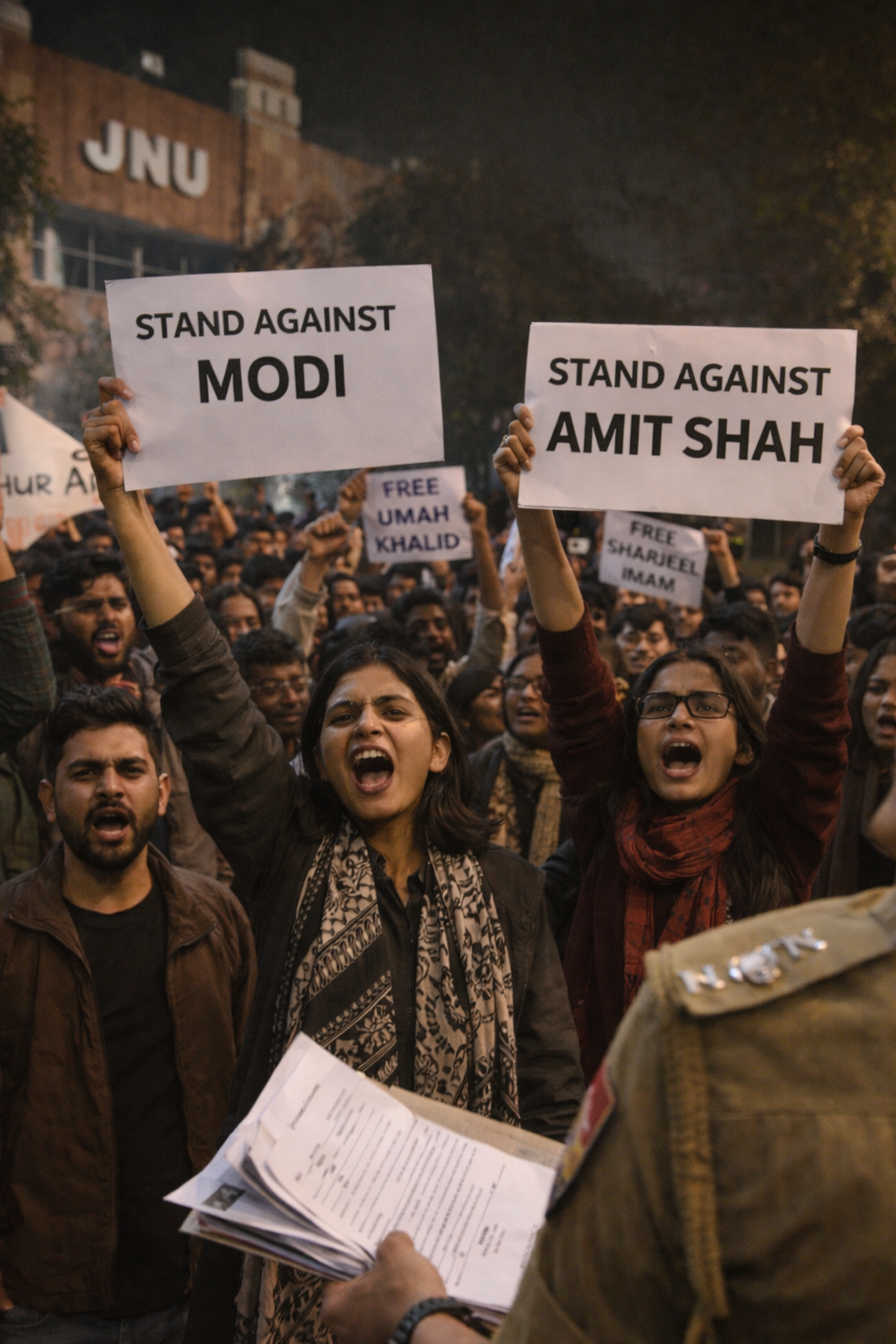
A group of students at Jawaharlal Nehru University held a protest on campus on Monday night following the Supreme Court’s decision to deny bail to Umar Khalid and Sharjeel Imam in the 2020 Delhi riots conspiracy case.
ALSO READ: Supreme Court Puts Aravalli Protection Orders on Hold, Goes For Fresh Expert Review
Videos circulating on social media showed students raising slogans critical of Prime Minister Narendra Modi and Union Home Minister Amit Shah. The slogans triggered a fresh political controversy.
JNUSU President Defends Protest
JNUSU president Aditi Mishra said the protest was part of an annual commemoration of the January 5, 2020 campus violence.
She said students gather every year to condemn what happened that night.
ALSO READ: Supreme Court Ruling on Delhi Riots Bail Pleas
She claimed the slogans raised were ideological in nature and were not meant as personal attacks. According to her, the protest was not directed at any individual.
Police Say No Complaint Filed
A senior police officer said no formal complaint has been received so far regarding the slogans raised during the protest.
Authorities said they are monitoring the situation but no legal action has been initiated at this stage.
Delhi Ministers Condemn Incident
Delhi ministers Ashish Sood and Manjinder Singh Sirsa strongly criticised the protest and accused Opposition parties of backing such actions.
Sood alleged that Sharjeel Imam had spoken about separating Northeast India and claimed Umar Khalid had raised slogans calling for the country’s division.
He said sympathy for such individuals encouraged similar protests.
He added that while political disagreements are part of democracy, there is no place for violence or divisive slogans.
Sirsa echoed similar views and said those raising such slogans showed no respect for the Constitution or the law.
He alleged that separatist thinking was being encouraged and blamed the AAP and Congress for supporting such groups.
Reference to 2020 JNU Violence
The protest revived memories of the January 5, 2020 violence at JNU, when masked attackers entered the campus and targeted students in multiple hostels.
Armed with sticks, stones and iron rods, the mob vandalised property and assaulted students.
At least 28 people were injured, including then JNUSU president Aishe Ghosh. The violence continued for nearly two hours, creating chaos across the campus.
Police Action Faced Criticism
The Delhi Police had faced heavy criticism for allegedly failing to act promptly during the violence. Questions were also raised over FIRs that named student leaders in cases related to campus vandalism.
The latest protest has once again placed JNU at the centre of a national political debate, with sharp divisions over free expression, campus politics and national security.
ALSO READ: JNUSU Accuses Varsity Administration of Targeting Student Leaders