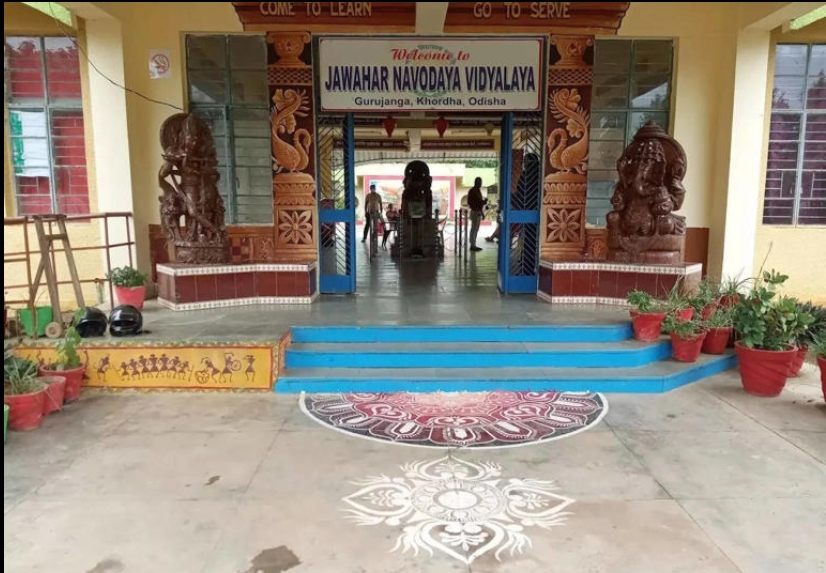
Health Situation Improving at Khordha Navodaya Vidyalaya: Odisha Minister
The Odisha government has said that the health crisis at a residential school in Khordha district is coming under control, with most affected students now recovering.
The assurance came after a sudden spike in jaundice cases at Jawahar Navodaya Vidyalaya in Gurujang raised alarm among parents and authorities.
ALSO READ: Indore Water Emergency: Diarrhoea Outbreak Hospitalises 142, Blame Game Intensifies
Odisha Health Minister Mukesh Mahaling said the administration responded swiftly after reports emerged.
Medical teams were rushed to the campus, and students showing symptoms were immediately examined and treated.
Central Team Probes Source of Infection
A central health team has also reached the school to identify the source of infection and ensure the safety of students.
Officials collected environmental samples, including water samples, to check whether the school’s drinking water supply meets safety standards.
ALSO READ: Indore Water Contamination Tragedy: Sewage-Mixed Supply Claims Lives, NHRC Seeks Report
Mahaling said strict monitoring is underway and added that necessary steps are being taken to prevent further spread of the disease.
He said student health remains the top priority.
What Happened
Over 40 students were taken ill after a jaundice outbreak at the Jawahar Navodaya Vidyalaya (JNV) on Sunday.
One student was diagnosed with jaundice reportedly after returning to the school from Christmas vacation.
Later, several other students tested positive.
District Health Department personnel visited the school on Sunday, while a state-level team arrived on Monday. Water Corporation of Odisha (WATCO) General Manager Rajendranath Nayak said samples have been collected from the school and sent for testing.
“The water supplied by WATCO might not be contaminated. We suspect that the disease spread due to some outside food items,” he added.
ALSO READ: ‘Waterman’ Rajendra Singh Calls Indore Tragedy a Man-Made Disaster
Past Jaundice Deaths Spark Wider Concern
The incident has revived memories of a major jaundice outbreak last year in Andhra Pradesh, where two tribal girls, Anjali and Kalpana, died and over 120 students were hospitalised.
Political leaders had blamed contaminated water, poor sanitation, and non-functional RO plants for the tragedy.
ALSO READ: Five Healthy Winter Drinks to Stay Fit and Healthy
They had demanded ₹10 lakh compensation for each bereaved family and long-term reforms in residential schools.
Allegations of Neglect in Tribal Schools
YSR Congress Party leader Pushpa Srivani alleged that RO water plants installed earlier had not been maintained for months.
She claimed students were forced to drink unsafe water due to official neglect.
She also alleged that basic facilities such as fans, mosquito nets, and sanitation services were missing.
ALSO READ: 5 Foods and Drinks to Avoid During Winter
According to her, sanitation workers have not been paid for the last three months.
Rising Cases and Political Criticism
Araku MP Tanuja Rani said at least 129 students are currently suffering from jaundice due to prolonged neglect.
She accused authorities of ignoring repeated warnings and failing to provide safe water, nutritious food, or preventive medical camps.
ALSO READ: Long Walks Beat Short Walks for Heart Health and Longevity
She also criticised the Tribal Welfare Minister for visiting schools only after media attention and making contradictory statements.
Jagan Reddy Blames State Government
Former Andhra Pradesh Chief Minister YS Jagan Mohan Reddy blamed the Chandrababu Naidu-led government for what he called gross negligence.
In a post on X, he said the failure of an RO plant at a tribal girls’ school in Parvathipuram Manyam district forced students to consume contaminated water.
ALSO READ: Quit Sugar for 14 Days: How It Heals Your Liver and Boosts Metabolic Health
He said two girls died within days of the outbreak, while many others fell ill. He called the incident a reflection of systemic failure in protecting tribal students.
Calls for Urgent Reforms
Opposition leaders said the repeated outbreaks highlight deep gaps in tribal welfare and school infrastructure.
They demanded immediate corrective steps, regular maintenance of water systems, and accountability to ensure student safety and dignity going forward.
ALSO READ: CTET February Exam: CBSE Reopens Application Window for Over 1.6 Lakh Incomplete Forms