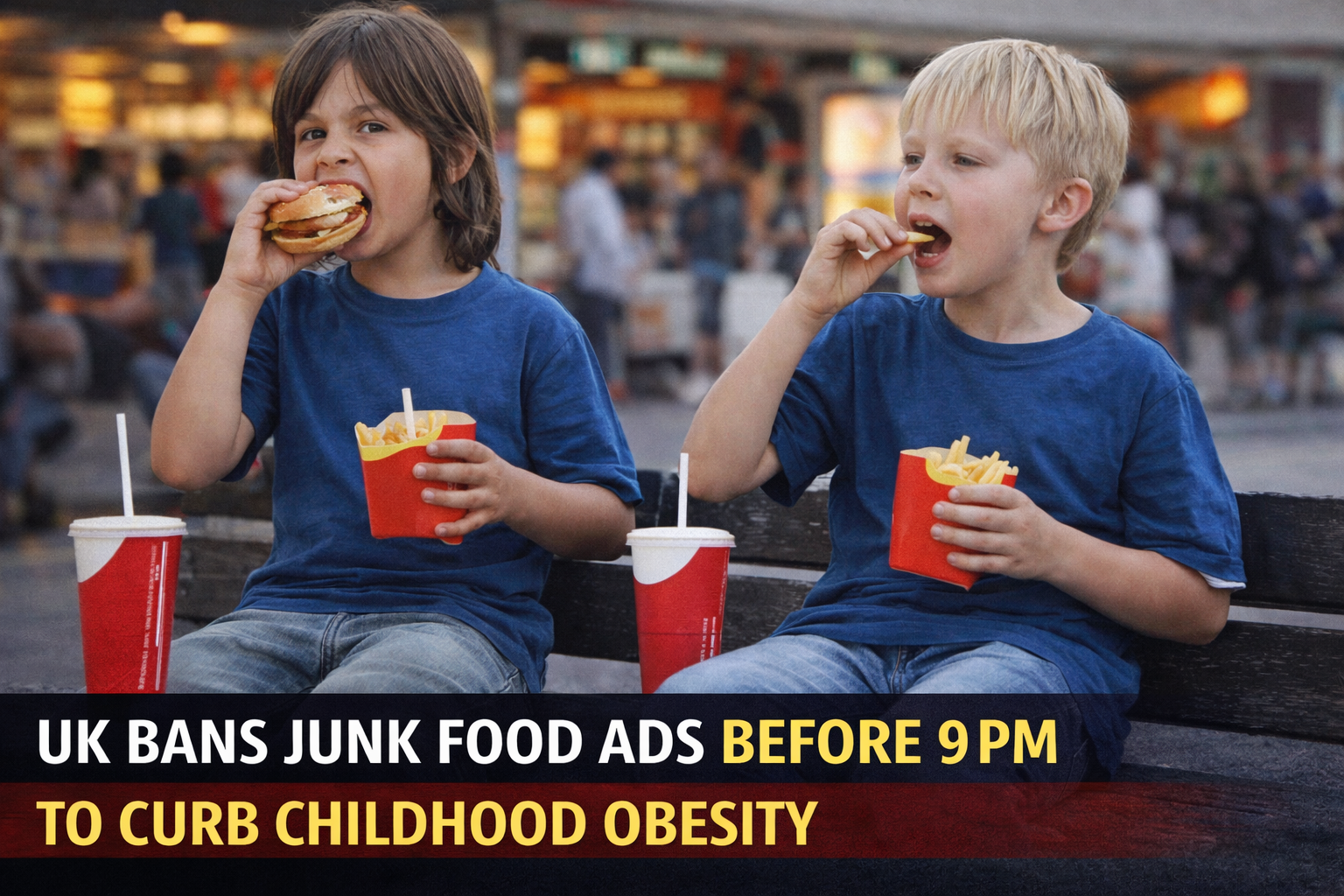
UK Enforces New Junk Food Advertising Ban
A nationwide ban on junk food advertising before 9 pm on television, and at all times online, came into force on Monday as the UK steps up efforts to tackle rising childhood obesity.
The policy forms part of a broader health drive led by the Department of Health and Social Care.
The restrictions target adverts for foods high in fat, sugar and salt, as well as sugary drinks. Officials say the move will sharply reduce children’s exposure to unhealthy food marketing.
Billions of Calories Expected to Be Cut
The health department estimates the ban will remove up to 7.2 billion calories from children’s diets every year.
Over time, it expects the measures to reduce the number of children living with obesity by around 20,000.
The government also projects long-term savings of about £2 billion for the National Health Service, as fewer children develop obesity-related health conditions.
Government Focus Shifts to Prevention
Health Minister Ashley Dalton said the policy aims to make healthier choices easier for families.
By limiting exposure to junk food advertising, especially during peak viewing hours, the government wants to reduce the influence of marketing on children’s eating habits.
ALSO READ: Long Walks Beat Short Walks for Heart Health and Longevity
Dalton said the focus is shifting away from treating illness to preventing it, so people can live healthier lives and the NHS can better cope with demand.
Evidence Links Advertising to Childhood Obesity
The Department of Health and Social Care said strong evidence shows advertising shapes what children eat and when they eat.
Exposure at a young age influences taste preferences and increases the risk of obesity later in life.
Official figures underline the scale of the problem. In England, 22.1 per cent of children are overweight or obese when they start primary school.
ALSO READ: Five Healthy Winter Drinks to Stay Fit and Healthy
By the time they leave, that figure rises to 35.8 per cent.
Health officials also point to dental health as a warning sign. Tooth decay remains the leading cause of hospital admissions for children aged five to nine across the UK.
Health Campaigners Welcome the Move
Public health groups have welcomed the new rules. Katharine Jenner, Executive Director of the Obesity Health Alliance, said the restrictions mark real progress.
She said reducing exposure to the most harmful food advertising helps create a healthier food environment for children.
ALSO READ: US Childhood Vaccination Guidelines Overhauled: CDC Cuts List from 17 to 11
Jenner added that the policy is a key step toward the government’s ambition of raising the healthiest generation ever, though more action will be needed over time.
Industry Given Time to Prepare
Food and drink companies had advance notice of the ban. The restrictions began on a voluntary basis in October 2025, before becoming legally binding this week.
The health department said this early warning encouraged businesses to adapt. Some companies have already reformulated products and promoted healthier options, similar to changes seen after the introduction of the Soft Drinks Industry Levy.
ALSO READ: 7 Tips to Keep Your Hair Healthy and Strong
More Measures on the Way
The government plans to expand the Soft Drinks Industry Levy to include more products, such as sugary milk-based drinks. It also intends to ban the sale of high-caffeine energy drinks to children under 16.
Together, officials say, these measures aim to reduce sugar intake, improve diets and protect children’s health in the long term.
ALSO READ: Natural Ways to Relieve Joint Pain and Stiffness During Winter