Delhi Wakes Up to Cleaner Air After Days of Pollution
After spending several days in the ‘very poor’ air quality category, Delhi finally received some relief as the Air Quality Index (AQI) improved to the ‘poor’ range. A chilly and windy morning helped disperse pollutants, offering temporary breathing space to residents of the national capital.
According to data released by the Central Pollution Control Board (CPCB), Delhi recorded an overall AQI of 235 at around 8 am. While the air remains unhealthy for sensitive groups, the improvement marked a significant drop compared to the severe pollution levels seen earlier in the week.
AQI Drops Across Several Monitoring Stations
Air quality data from key monitoring stations across Delhi showed mixed but improved readings. Anand Vihar reported an AQI of 248, while R.K. Puram stood at 252. Rohini recorded 270 and Mundka registered 281, remaining closer to the upper end of the ‘poor’ category.
Central Delhi areas fared slightly better. ITO recorded an AQI of 219, indicating relatively cleaner air. Peripheral regions such as Bawana and the Indira Gandhi International (IGI) Airport area showed the most noticeable improvement, with AQI levels of 145 and 148 respectively, placing them in the ‘moderate’ category.
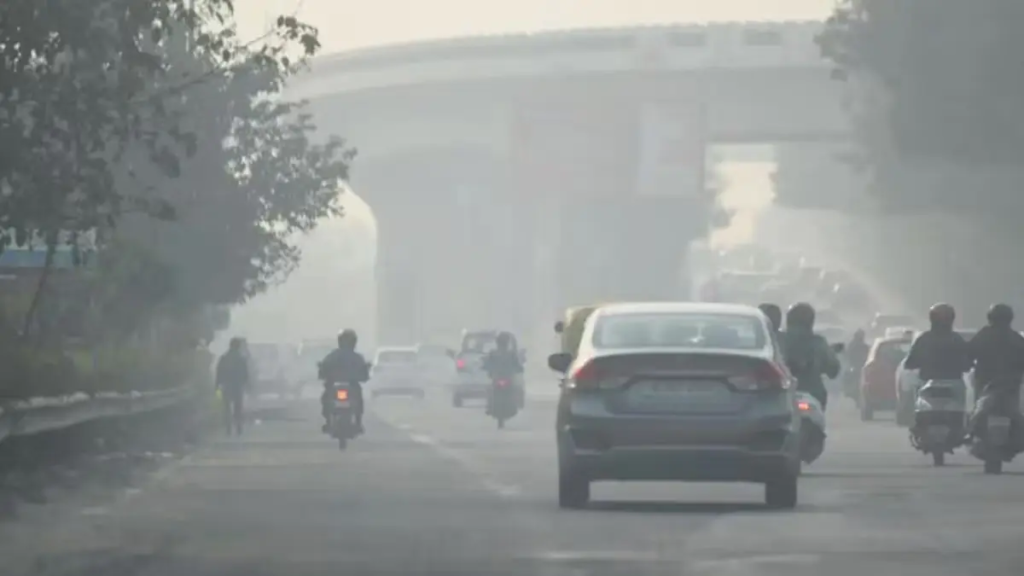
Wind Speed Plays a Key Role in Air Quality Improvement
Weather conditions played a crucial role in improving Delhi’s air quality. The India Meteorological Department (IMD) reported overnight winds with an average speed of around 12 kmph. These winds helped lift dense fog and disperse accumulated pollutants that had remained trapped due to calm conditions earlier.
On Friday morning, the AQI stood at 311 at 7 am but dropped sharply to 236 by 4 pm. A day earlier, the AQI had touched nearly 380 during the same time, highlighting how favorable weather conditions can bring rapid but often short-lived relief.
Cold Conditions Continue Despite Cleaner Air
While pollution levels declined, winter conditions persisted across the city. IMD reported that Delhi’s temperature hovered around 10 degrees Celsius on Saturday morning. Dense fog appeared during early hours, though visibility gradually improved as winds picked up.
The weather department expects minimum temperatures to range between 8°C and 9°C, while maximum temperatures may stay between 15°C and 17°C over the next couple of days. Meteorologists suggest that conditions may continue to support better dispersion of pollutants in the short term.
Also Read: Delhi Government Plans Revival of Shared Rides to Tackle Air Pollution
GRAP Stage-III Withdrawn, Monitoring Continues
With the improvement in air quality, the Sub-Committee on the Graded Response Action Plan (GRAP) under the Commission for Air Quality Management (CAQM) decided to revoke Stage-III restrictions. However, authorities have urged citizens to strictly follow guidelines under GRAP Stages I and II to prevent another spike in pollution levels.
The government has reiterated that construction and demolition sites previously ordered to shut down due to violations will not resume operations without explicit approval from the Commission. Enforcement teams remain on alert to ensure compliance with pollution control norms.
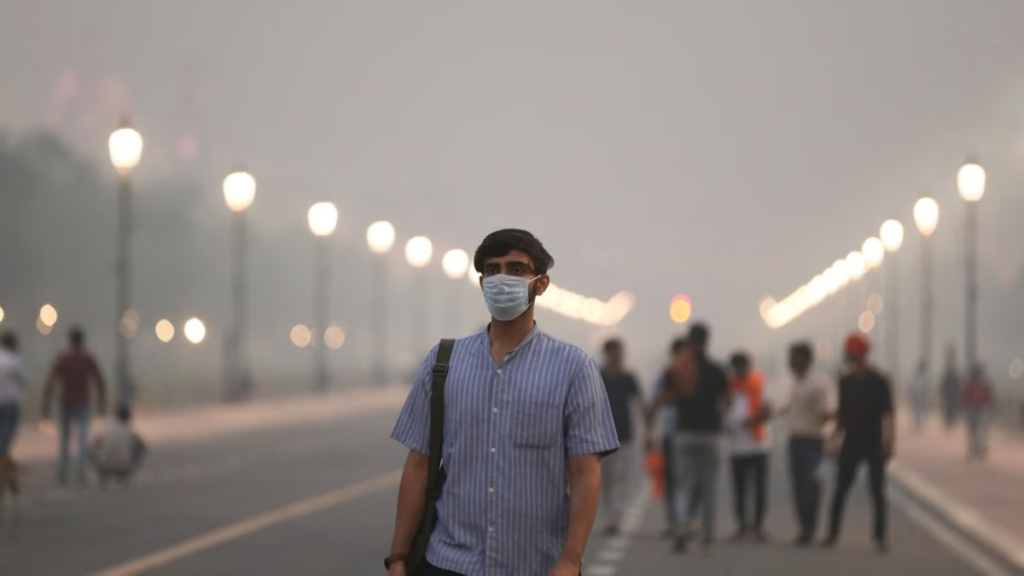
Republic Day Rehearsals Continue Amid Smog
Despite improved AQI levels, a thin layer of smog remained visible in parts of central Delhi. Republic Day rehearsals at India Gate continued as scheduled, with security personnel and parade participants carrying on amid reduced visibility.
Authorities have stated that they will closely monitor air quality trends, especially with Republic Day celebrations approaching, to ensure public health and safety.
Also Read: Fog Disrupts Air Traffic at Delhi Airport
Authorities Urge Continued Vigilance
Officials cautioned that the current improvement may be temporary. They stressed the importance of sustained efforts, including reduced vehicular emissions, dust control, and adherence to environmental regulations.
The CAQM sub-committee will continue to review air quality data and weather forecasts provided by IMD and IITM. Any deterioration in AQI levels could prompt the reimposition of stricter GRAP measures.